10 Costly Errors Property Buyers Make by Skipping a Snagging Inspection
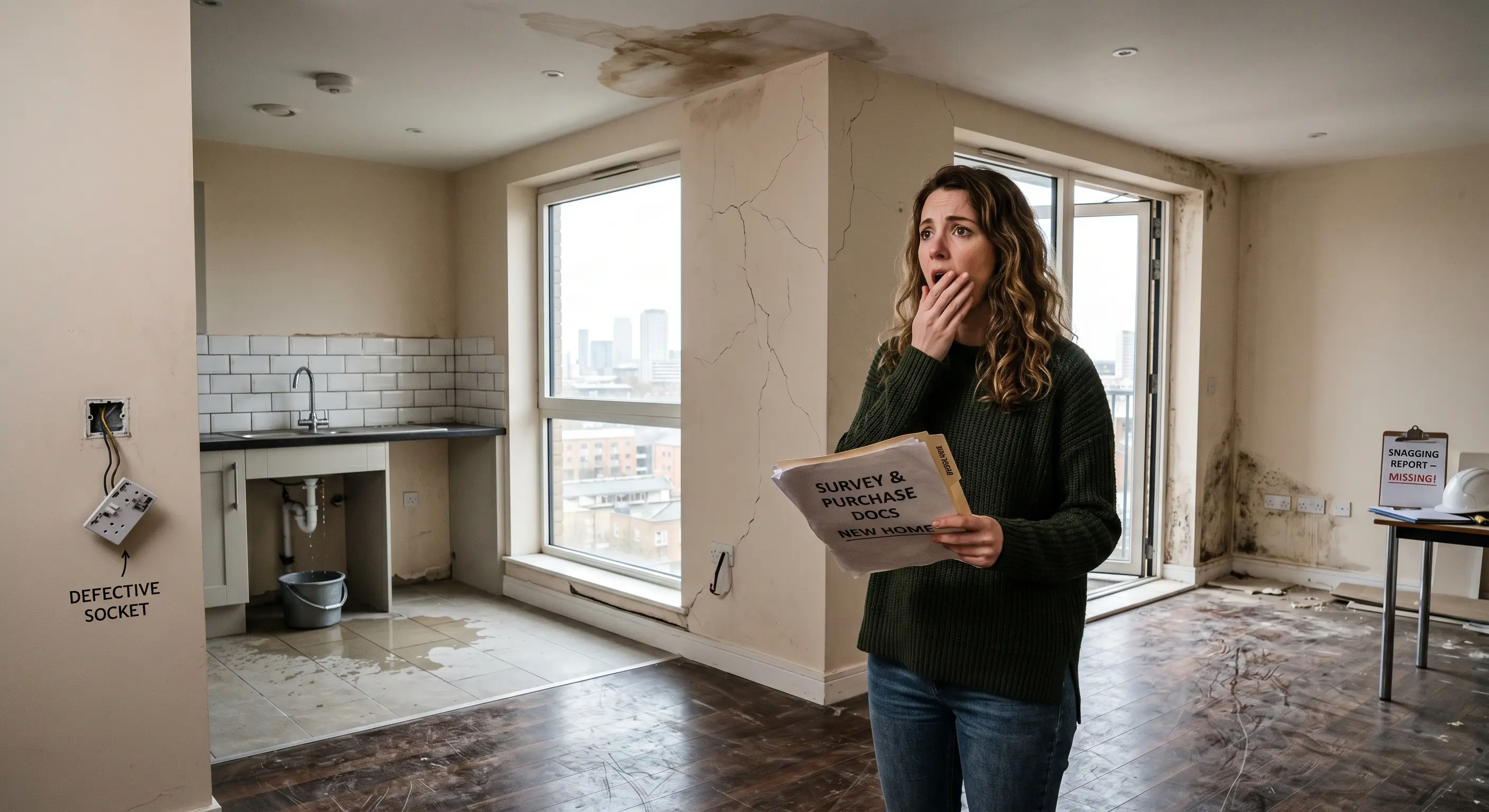
Buying a new home is one of the biggest financial decisions you will ever make. The excitement of receiving your keys can make it tempting to skip straight to moving in. But that enthusiasm, if it leads you to bypass a professional snagging inspection, can cost you significantly more than the inspection itself. Here are ten mistakes buyers make when they decide to go without one.
1. Believing New Means Perfect
New properties carry an assumption of quality that is not always warranted. Construction projects involve many trades, compressed schedules, and handoffs between teams. Errors happen even on well-run sites. A brand-new property can contain dozens of minor defects that only a structured inspection will surface.
2. Dismissing Small Defects as Trivial
A hairline crack, a door that catches slightly, a tile with a faint hollow sound when tapped — buyers often brush past these details during a walkthrough. But small visible defects frequently signal larger underlying problems. A trained inspector knows which imperfections to investigate further and which are genuinely superficial.
3. Relying Entirely on the Developer's Own Quality Check
Developers do carry out pre-handover checks. But an internal check is conducted with the developer's interests in mind, not yours. An independent snagging inspector works exclusively for you. Their findings do not get filtered through the developer's priorities, and their report gives you a clear, unbiased picture of what needs attention.
4. Overlooking Systems Hidden Behind Walls and Ceilings
Electrical conduits, plumbing runs, drainage lines, and insulation are all out of sight during a casual inspection. Faults in these systems can remain undetected for months, only becoming apparent when a pipe weeps, a circuit trips, or condensation appears on a wall. Professional inspectors use moisture meters, socket testers, and thermal cameras to find what the eye cannot.
5. Missing the Handover Window
The period immediately before formal handover is the single best moment to raise defects with a developer. At that stage, their contractors are still on site, their obligations under your sale and purchase agreement are at their clearest, and their motivation to close out the project is highest. Once you have signed the handover documents, every repair request becomes a warranty claim — a slower, more uncertain process.
6. Underestimating How Quickly Minor Issues Escalate
A small silicone gap in a wet room. A slightly loose tap fitting. A drain that empties just a little too slowly. None of these seem urgent on move-in day. Six months later, that gap has allowed moisture into the wall, that fitting has dripped onto the cabinet below, and that drain has backed up into the bathroom. Pre-handover repairs are free. Post-occupation repairs are not.
7. Having No Written Record of Defects
If you accept a property without a formal snagging report, you have no documented baseline of its condition at handover. Any defects you later discover become subject to dispute — the developer may claim they occurred after you moved in. A professional inspection report with photographs and timestamps removes that ambiguity entirely.
8. Assuming a Personal Walkthrough Is Sufficient
You may be careful and observant. But a professional snagging inspector brings more than attention to detail — they bring a structured methodology, specialist tools, and experience across hundreds of similar properties. They know exactly where defects hide on specific property types, and they test systems in ways that a standard walkthrough simply does not.
9. Planning to Arrange an Inspection Later and Not Following Through
This is one of the most common patterns. Buyers intend to commission a snagging inspection but delay it until after handover, or never schedule it at all. By the time they notice issues worth reporting, the most favourable window for correction has already closed. Pre-handover inspection must be scheduled proactively — it cannot be a plan that gets deferred indefinitely.
10. Not Verifying That Reported Snags Were Actually Fixed
Submitting a snag list is only half the process. Many buyers hand over their report, receive confirmation from the developer that works are complete, and sign off without re-inspecting. In practice, items get partially addressed, substituted with lower-quality materials, or simply missed. A follow-up walkthrough against the original snag list — before you sign the final completion documents — is the only way to confirm that every issue has been resolved to the agreed standard. Trust the process, not the assurance.
Conclusion: Skipping a snagging inspection is not a shortcut. It is a transfer of risk — from the developer to you. The defects do not disappear. They simply become your problem to fix, at your expense, on your time. A professional snagging inspection before handover costs a fraction of what post-occupation repairs typically run. Start your homeownership on solid ground — inspect before you accept.
Avoid Costly Post-Handover Repairs
Inspect before you accept. Trust Prime Project Partners for a thorough pre-handover snagging inspection in the UAE. Fill out our contact form today to book.
Book a Consultation→